 Sioux Falls Hood Cleaning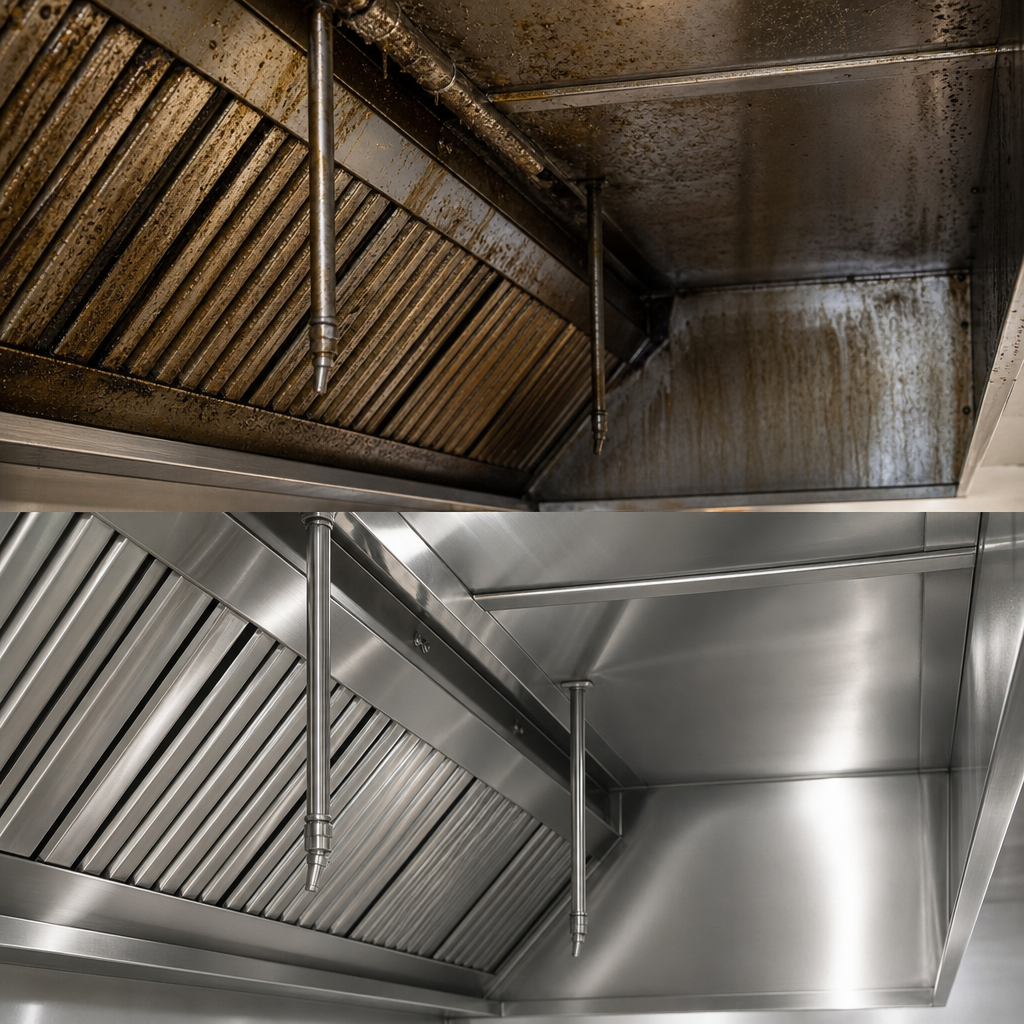
If you run a kitchen in Sioux Falls, your exhaust system falls under the 2021 International Fire Code, adopted by the city through Chapter 91 of its Code of Ordinances and enforced by Sioux Falls Fire Rescue. That code requires the hood, filters, plenum, ductwork, and rooftop fan to be inspected on a set schedule and cleaned to bare metal by qualified, certified people, and a typical single-hood cleaning here runs $300–$700 per service. Sioux Falls Hood Cleaning connects your kitchen with certified, insured local companies that do the work overnight and leave the photos, report, and dated sticker your inspector wants to see.
That’s the whole pitch. No scare tactics, no mystery pricing. Below is what the code actually says, what a proper service looks like, and what it costs, because a GM comparing bids at 11 p.m. after close deserves straight numbers.
The compliance picture for a Sioux Falls kitchen
Two separate systems in your building accumulate grease, and two separate sets of rules apply.
The exhaust side. Everything from the hood canopy to the rooftop fan is governed by NFPA 96, pulled into force by the city’s fire code (IFC §606, inspection per Table 606.3.3.1, cleaning method per ANSI/IKECA C10). NFPA 96 (2024) Table 12.4 sets inspection frequency by cooking volume:
| Cooking operation | Inspection frequency |
|---|---|
| Solid-fuel cooking (wood, charcoal) | Monthly |
| High-volume (24-hour, charbroiling, wok) | Quarterly |
| Moderate-volume | Semiannually |
| Low-volume (churches, seasonal, day camps, senior centers) | Annually |
Note the word inspection. Cleaning is triggered by what the inspection finds: under §12.6.1, grease is measured with a depth-gauge comb, and the system gets cleaned when deposits reach 0.078 inches (2000 microns) on surfaces or 0.125 inches in fan housings. In practice, a charbroiler-heavy kitchen hits the trigger about every quarter, which is why “quarterly hood cleaning” is the industry shorthand, but the mechanism is inspect, measure, then clean. The NFPA 96 compliance page walks through the whole framework, and the full-system work itself lives on the restaurant hood cleaning page.
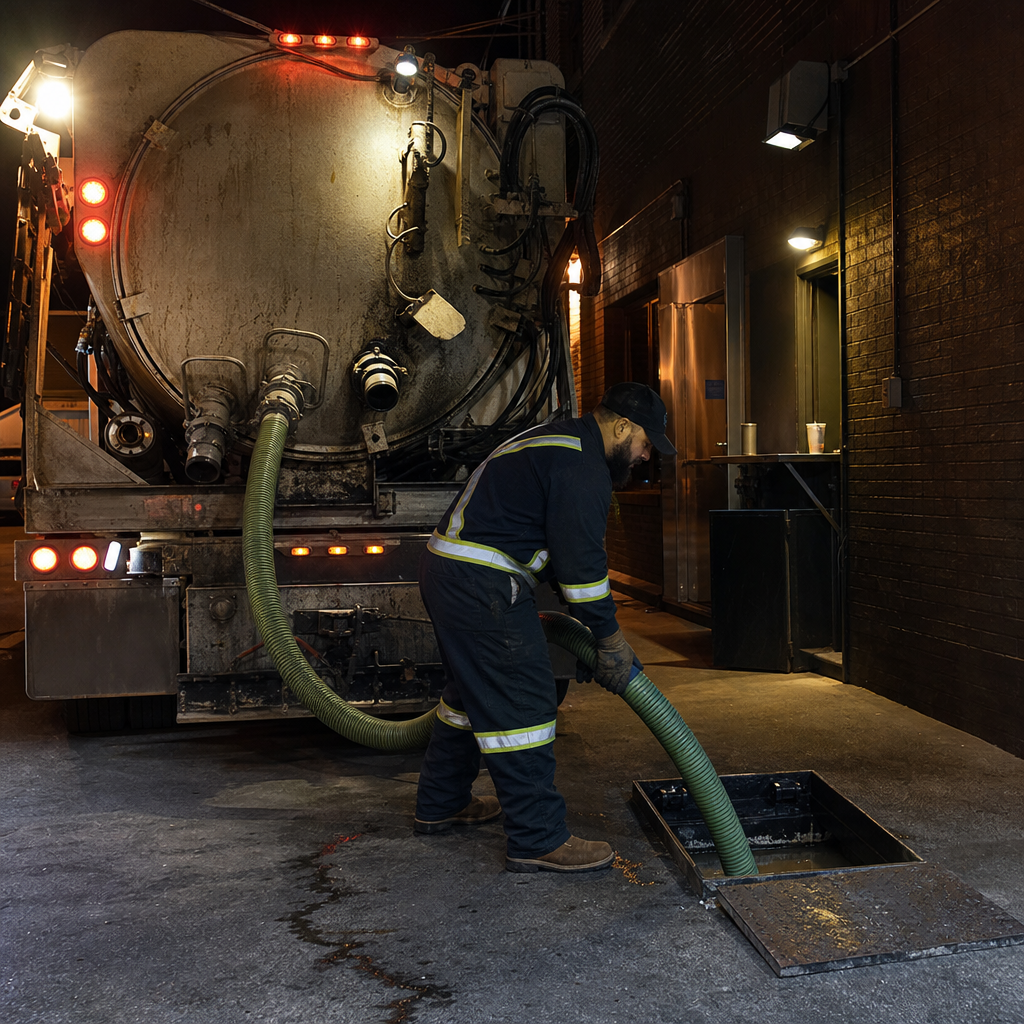
The drain side. Fats, oils, and grease going down your drains are the city’s pretreatment concern, run by Public Works’ Environmental Division. Sioux Falls doesn’t codify a pumping calendar. The lever is a sewer surcharge when your discharge exceeds 100 mg/L of grease under §51.081(d) of the Code of Ordinances. Keeping the trap pumped before it passes grease downstream is how you stay under that line; see grease trap pumping and grease interceptor service.
One more genuinely local fact: Sioux Falls operates South Dakota’s only municipal health department, inspecting roughly 800 food establishments inside city limits under the state food code. Everywhere else in the state, including the satellite towns we serve, kitchen licensing runs through the South Dakota Department of Health. If you operate locations on both sides of that line, your fire-code paper trail is the one constant every inspector recognizes.
What a full service includes
A real NFPA 96 cleaning covers the entire grease path, not just the shiny part over the cookline:
- Hood canopy and baffle filters: scraped, degreased, washed. Bent or burned-through filters flagged for replacement (or put on a filter exchange route).
- Plenum: the chamber behind the filters where grease concentrates first.
- Ductwork: the vertical and horizontal runs to the roof, the part no one sees and the part that burns. Access panels get opened, or their absence gets documented.
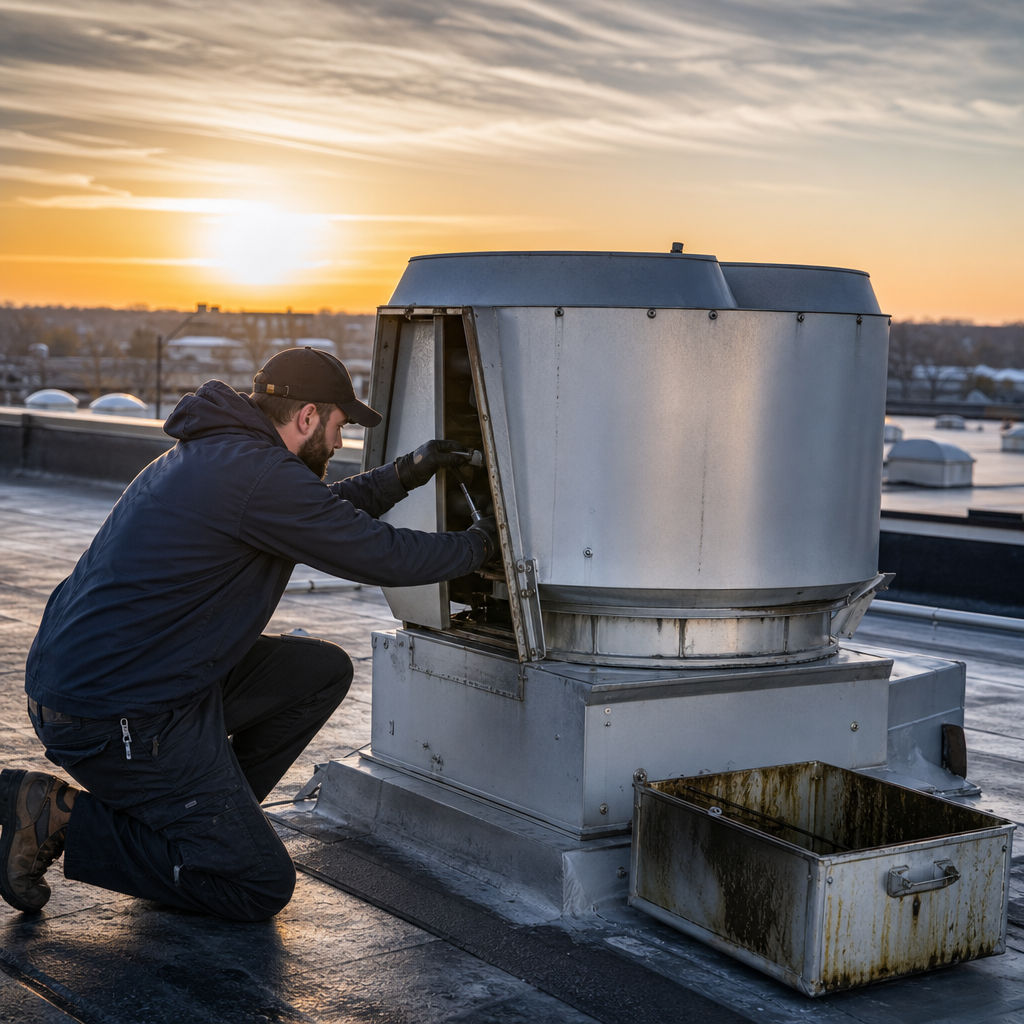
- Rooftop fan: opened, degreased, and inspected; belts, bearings, and grease containment checked. Fan-specific work, including hinge-kit installs that make future cleanings faster and safer, is covered under exhaust fan service.
- Documentation, before-and-after photos of the duct interior and fan, a written service report, and a dated certification sticker on the hood.
The cleaning endpoint is the bare-metal standard: no more than 0.002 inches (50 microns) of residual combustible material anywhere in the system. If a bidder’s “cleaning” is a canopy wipe-down and a new sticker, the duct above it still holds the fuel load, and the photos, or lack of them, tell that story.
Downtown, Phillips Avenue, and the rest of the map
Sioux Falls’ densest concentration of commercial kitchens runs through downtown, the restaurant rows along Phillips Avenue and the blocks between the river greenway and Minnesota Avenue. Those buildings are also where exhaust systems get complicated: older multi-story structures with long duct runs, shared walls, tight alley access, and rooftop fans that take real planning to reach. An overnight crew working a Phillips Ave kitchen coordinates roof access and parking before the first truck rolls, because 2 a.m. is not the time to discover the hatch is locked.
Beyond downtown, the work spreads with the city: the 41st Street corridor’s franchise density, the Empire Mall’s food operations, hospital and campus kitchens, and the newer pads going in along Veterans Parkway on the city’s growing east and south edges. And the Sioux Empire’s kitchens don’t stop at the city line: we cover Brandon, Harrisburg, Tea, and Dell Rapids, where the fire-code math is the same but the licensing authority changes.
What it costs, published
| Service | Typical range |
|---|---|
| Single-hood system cleaning | $300–$700 per service |
| Multi-hood system (2–4 hoods) | $800–$1,500 per service |
| Indoor grease trap pump-out (20–100 gal) | $150–$450 per visit |
| In-ground interceptor (to ~1,000 gal) | ~$325–$950 per visit |
| Rooftop fan hinge kit install | $150–$300 |
| Rush / pre-inspection service | 25–50% premium |
Price depends on hood count, duct run length, roof access, grease load, and trap size. A free walkthrough gets you a firm quote instead of a guess. The pricing page breaks down every line, including what pushes a small hood toward $200 and a complex system past $800.
Who does the work, and the honest version of “certified”
South Dakota has no state license for hood cleaners. Anyone with a pressure washer can print “hood cleaning” on a truck door. What actually governs the work is NFPA 96’s requirement that it be performed by “properly trained, qualified, and certified person(s) acceptable to the authority having jurisdiction”, and the industry credentials that answer it are IKECA’s CECS (Certified Exhaust Cleaning Specialist), CECT (technician), and CESI (inspector) designations.
Sioux Falls Hood Cleaning is an independently operated local service: we connect your kitchen with certified, insured local companies, and the crews that show up carry their own credentials and insurance. We don’t issue certificates ourselves and nobody can guarantee what a fire inspector concludes, what a proper service guarantees is a system cleaned to the standard and a paper trail that proves it. More on how that works about us.
When to book
The smart cadence is set by your menu, not the calendar on the wall: charbroilers, woks, and 24-hour lines are quarterly-inspection territory; a moderate-volume kitchen is semiannual. If a fire inspection is already scheduled and the last sticker is stale, rush service exists, at a 25–50% premium, which is the most expensive way to buy the same cleaning. The cheaper path is a standing schedule matched to your cooking volume, serviced overnight so you never trade revenue hours for compliance.
Have questions first? The FAQ answers the ones GMs actually ask. Otherwise, send the form or call (605) 675-7391 for a free walkthrough quote: hood count, duct run, roof access, trap size, firm number.